
How Digital Product Passports (DPP) Improve Supply Chain Transparency?
- Author:PassoNext
- Posted on:
- Updated on:
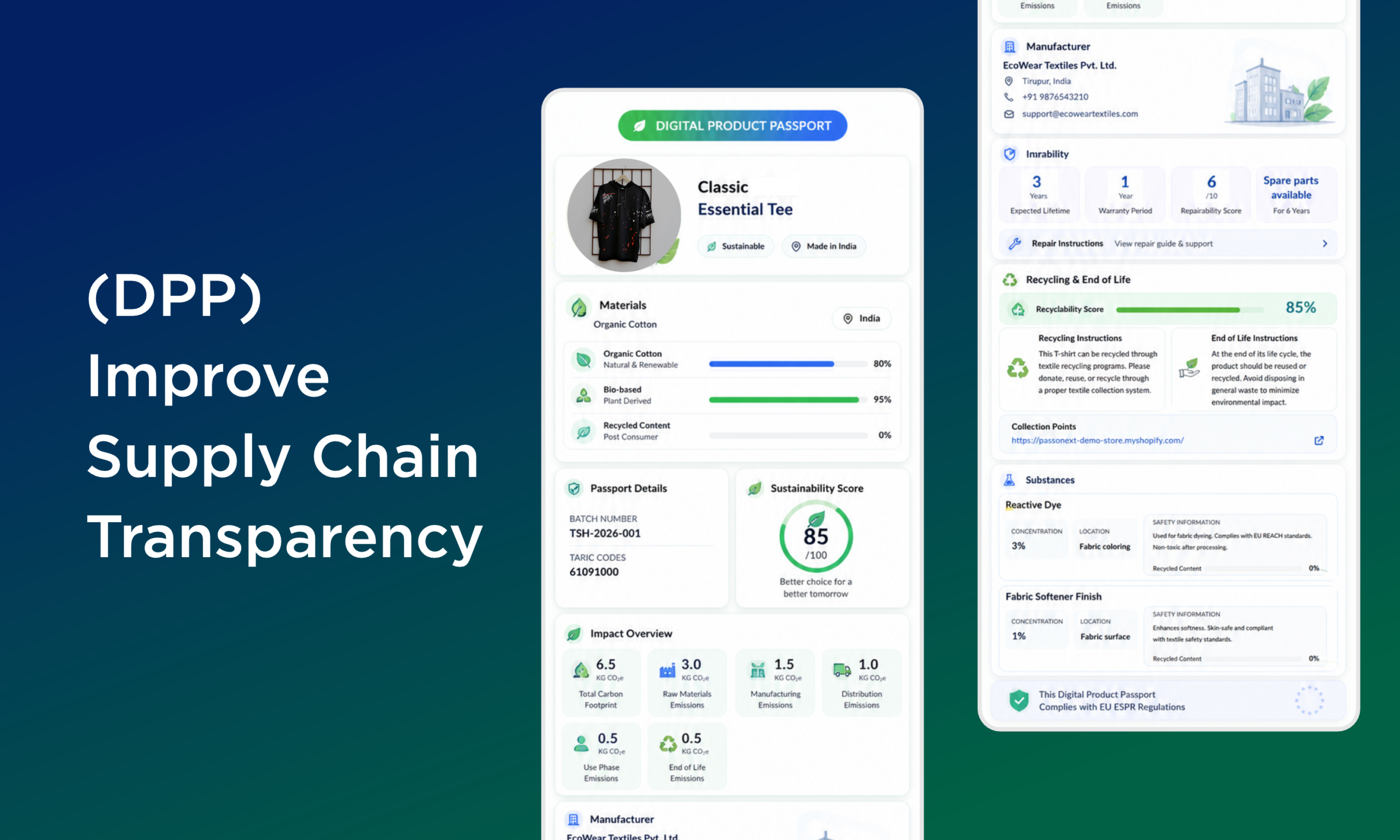
In today’s global market, supply chain transparency is no longer optional—it’s becoming a business necessity. Customers want to know where products come from, how they are made, and whether they meet sustainability standards. At the same time, regulations in regions like the European Union are pushing companies to provide detailed and verifiable product information.
This is where Digital Product Passports (DPPs) play a crucial role. They help businesses create a clear, structured, and accessible system for managing product data across the entire supply chain.
Understanding Supply Chain Transparency
Supply chain transparency refers to the ability to track and share information about every stage of a product’s lifecycle. This includes raw material sourcing, manufacturing, packaging, logistics, and even recycling.
Traditionally, this information is stored in different systems or managed by multiple suppliers. As a result, businesses often face challenges such as:
- Lack of visibility across suppliers
- Inconsistent or incomplete product data
- Difficulty verifying sustainability claims
- Delays in responding to compliance requirements
Without a unified approach, maintaining transparency becomes complex and time-consuming.
What is a Digital Product Passport?
A Digital Product Passport is a digital record that contains detailed information about a product. It is designed to store, organize, and share data in a standardized format.
A typical DPP may include:
- Product identification details (SKU, barcode)
- Material composition and sourcing
- Manufacturing location and process
- Environmental impact data
- Repair, reuse, and recycling instructions
DPPs are especially important under evolving regulations like the Ecodesign for Sustainable Products Regulation, which aims to improve product transparency and sustainability across industries.
How DPPs Improve Supply Chain Transparency
1. Centralized and Structured Data
One of the biggest advantages of DPPs is that they bring all product-related information into a single, organized system. Instead of relying on scattered documents or spreadsheets, businesses can access everything from one place.
This centralized approach ensures:
- Consistent product information
- Reduced data duplication
- Easier access for internal teams and external partners
It also minimizes errors that often occur when data is handled across multiple systems.
2. End-to-End Traceability
DPPs allow businesses to trace products from the origin of raw materials to the final customer. This level of visibility is essential for identifying risks and ensuring compliance.
For example, companies can:
- Track where materials are sourced
- Monitor supplier performance
- Verify ethical and environmental claims
End-to-end traceability not only improves transparency but also strengthens accountability across the supply chain.
3. Real-Time Updates and Accuracy
Unlike traditional documentation, Digital Product Passports can be updated in real time. If there are changes in materials, suppliers, or certifications, the information can be updated instantly.
This ensures that:
- Customers always see the latest product information
- Businesses stay compliant with changing regulations
- Data remains accurate and reliable
Real-time updates reduce the risk of outdated or misleading information.
4. Better Supplier Collaboration
Supply chains often involve multiple stakeholders, including manufacturers, suppliers, and distributors. DPPs create a shared system where each participant can contribute relevant data.
This improves collaboration by:
- Standardizing how information is shared
- Making it easier to collect data from suppliers
- Reducing communication gaps
With better coordination, businesses can build stronger and more transparent supplier relationships.
5. Simplified Regulatory Compliance
Regulations in the European Union are increasingly focused on sustainability and transparency. Businesses are expected to provide detailed product-level data to regulators and customers.
DPPs simplify this process by:
- Organizing required information in a structured format
- Making it easy to share data with authorities
- Reducing the risk of non-compliance
Instead of scrambling to collect data during audits, businesses can rely on their DPP system to provide accurate information quickly.
6. Increased Customer Trust
Modern consumers are more conscious about what they buy. They want to understand the impact of their purchases and support brands that are transparent.
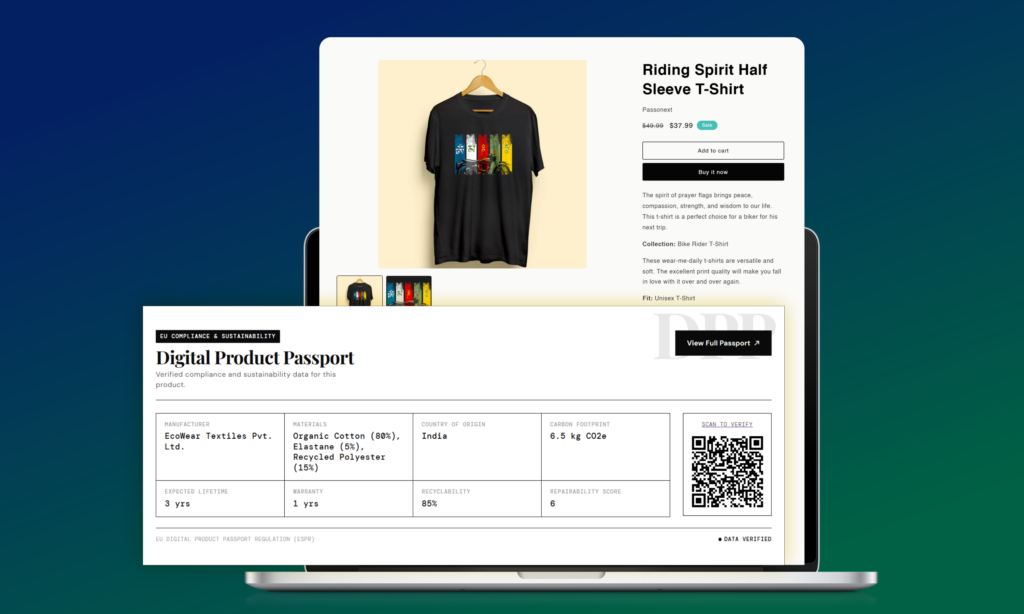
With DPPs, customers can access detailed product information simply by scanning a QR code. This may include:
- Product origin and materials
- Environmental footprint
- Care and recycling instructions
Providing this level of transparency helps build trust and strengthens brand loyalty.
The Role of Shopify in Enabling Transparency
For businesses using Shopify, implementing Digital Product Passports is more accessible than ever.
Shopify already stores essential product data such as descriptions, variants, and images. With the help of apps like PassoNext, merchants can:
- Sync product data automatically
- Generate DPPs directly from their store
- Keep information updated without manual effort
This makes it easier for businesses of all sizes to adopt DPPs without complex technical setups.
Business Benefits Beyond Compliance
While compliance is a major driver, DPPs also offer several strategic advantages:
- Improved decision-making: Access to accurate data helps businesses make better sourcing and production decisions
- Reduced operational risks: Transparency helps identify and resolve issues quickly
- Enhanced brand reputation: Transparent practices attract more conscious consumers
- Future readiness: Businesses are better prepared for upcoming regulations and market changes
By adopting DPPs early, companies can turn compliance into a competitive advantage.
Challenges and How DPPs Address Them
Many businesses hesitate to improve transparency due to challenges like data collection, supplier coordination, and system integration.
DPPs address these issues by:
- Providing a standardized data framework
- Simplifying data collection through digital tools
- Enabling automation and integration with existing platforms
This reduces the effort required and makes transparency more achievable.
Final Thoughts
Digital Product Passports are transforming the way businesses manage and share supply chain information. By creating a single source of truth, they improve visibility, accuracy, and trust across the entire product lifecycle.
For companies selling in the European Union, adopting DPPs is not just about meeting regulatory requirements—it’s about building a transparent, reliable, and future-ready supply chain.
As customer expectations and regulations continue to evolve, businesses that invest in transparency today will be better positioned for long-term success.
Frequently Asked Questions (FAQs)
What is a Digital Product Passport (DPP)?
A Digital Product Passport is a digital record that contains detailed information about a product, including its materials, origin, manufacturing process, and sustainability data. It helps businesses share accurate product information across the supply chain and with customers.
Why are DPPs important for supply chain transparency?
DPPs bring all product-related data into one place, making it easier to track, verify, and share information. This improves visibility across the supply chain and helps businesses maintain accurate and consistent product records.
Who needs to implement DPPs?
Any business selling physical products in the European Union may need to implement DPPs. This includes manufacturers, importers, retailers, and even dropshippers, depending on the product category.
What kind of data is included in a DPP?
A DPP typically includes product identification, material composition, country of origin, environmental impact, and care or recycling instructions. Some of this data comes from your existing systems, while other details may need to be added.
How do DPPs help with regulatory compliance?
DPPs organize product data in a structured format, making it easier to meet regulations like the Ecodesign for Sustainable Products Regulation. They allow businesses to quickly provide required information to authorities.
Can DPPs be updated after creation?
Yes, DPPs are designed to be updated in real time. If there are changes in materials, suppliers, or certifications, you can update the passport to keep the information accurate and compliant.
How do customers access Digital Product Passports?
Customers can access DPPs by scanning a QR code attached to the product, packaging, or product page. This allows them to view detailed product information instantly.
Are DPPs only for large companies?
No, DPPs apply to businesses of all sizes. With platforms like Shopify and tools like PassoNext, even small and medium businesses can easily create and manage DPPs.
Do DPPs require technical knowledge to implement?
No, most modern solutions are designed for ease of use. Shopify apps allow you to create and manage Digital Product Passports without coding or technical expertise.
How do DPPs improve customer trust?
By providing transparent and verified product information, DPPs help customers make informed decisions. This builds trust and strengthens brand credibility over time.
Get ESPR-ready today
The 2027 deadlines are closer than they look. Start building your DPP infrastructure now — not six months before the deadline. PassoNext is free to install.
