
Digital Product Passport for EV Batteries: EU Requirements Explained
- Author:PassoNext
- Posted on:
- Updated on:
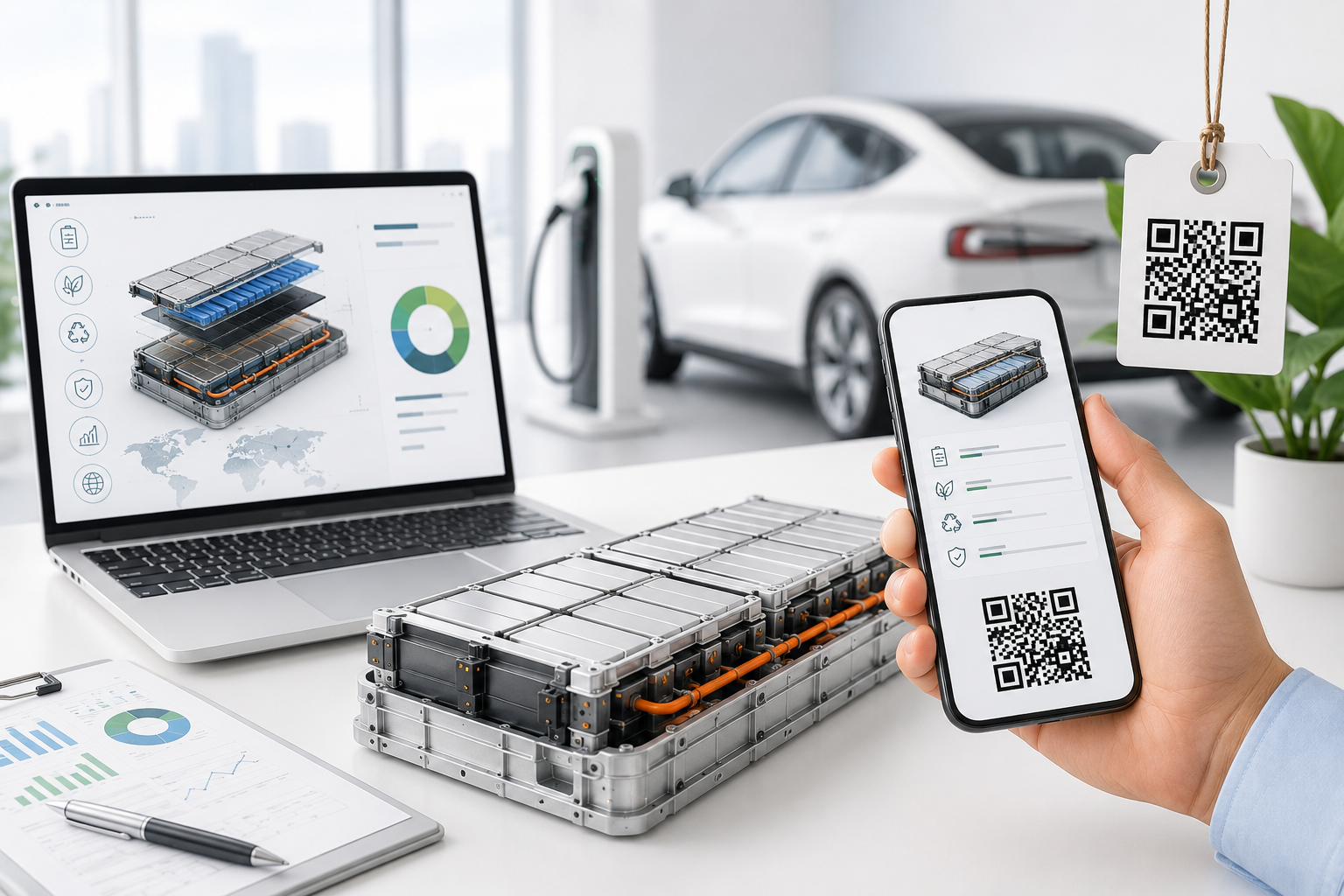
The EU Digital Product Passport for EV batteries will be mandatory for relevant batteries placed on the European Union market from 18 February 2027.
Under the EU Batteries Regulation, electric vehicle batteries, certain light means of transport batteries, and certain industrial batteries will need a digital Battery Passport containing important information about the battery, its performance, sustainability, materials, circularity, and other required data.
For businesses selling or placing EV batteries on the EU market, preparation cannot wait until 2027. The data needed for a Battery Passport often comes from multiple parts of the supply chain, including battery manufacturers, component suppliers, raw-material suppliers, testing organizations, and internal product systems.
For Shopify brands, this creates an additional challenge.
Product information may already exist in Shopify, but detailed battery information may be stored separately in supplier documents, spreadsheets, ERP systems, laboratory reports, carbon-footprint records, and compliance files.
A Shopify Digital Product Passport for EV Batteries can help create a more structured connection between product information and the digital passport experience.
In this guide, we explain what the EU requires, who needs a Battery Passport, the important timeline, expected compliance costs, what Shopify brands should prepare, and how PassoNext can support a structured product-data approach.
What Is a Digital Product Passport for EV Batteries?
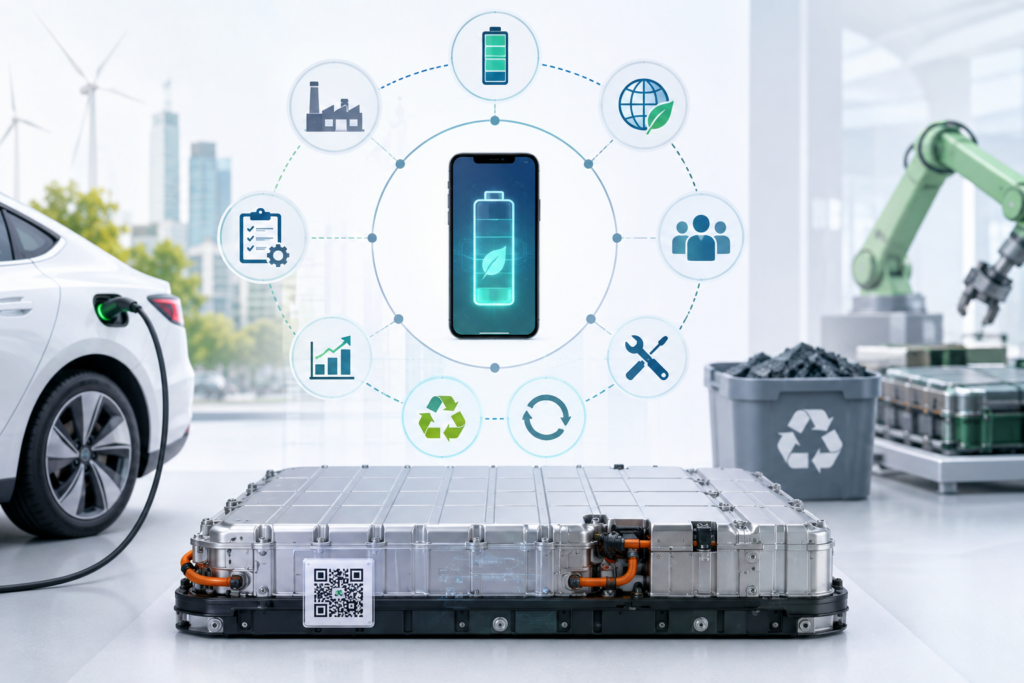
A Digital Product Passport, or DPP, is a digital record containing information about a product and its lifecycle.
For batteries, the EU has created a specific Battery Passport framework under Regulation (EU) 2023/1542.
The Battery Passport is intended to make relevant information available to different stakeholders, including economic operators, consumers, repairers, recyclers, and public authorities.
The passport can include information about:
- Battery identification.
- Technical characteristics.
- Manufacturer and economic operator information.
- Performance and durability.
- Sustainability information.
- Circularity.
- Repair and reuse.
- Recycling and end-of-life handling.
The Battery Passport will be linked to the physical battery through a digital data carrier such as a QR code.
In simple terms:
Physical EV battery → QR/data carrier → Digital Battery Passport → authorized product information
The system is designed to make battery information easier to access and support transparency across the battery lifecycle.
Who Needs an EU Digital Product Passport for Batteries?
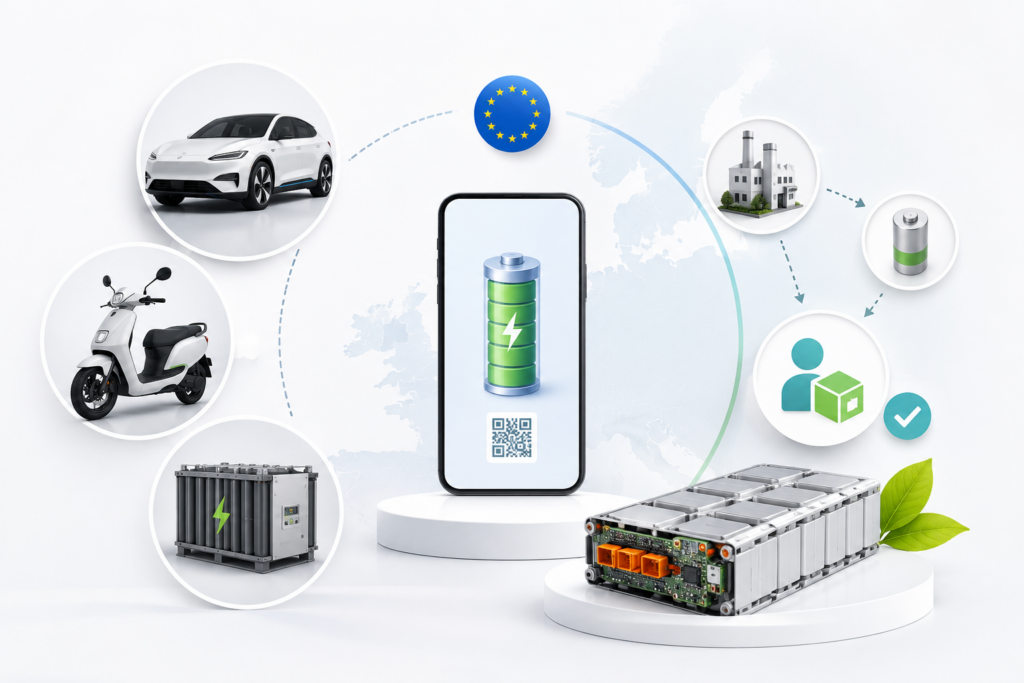
The Battery Passport requirement applies to economic operators placing certain batteries on the EU market.
The European Commission identifies the following categories within the Battery Passport framework:
- Electric vehicle batteries.
- Batteries for light means of transport such as e-bikes, e-mopeds and e-scooters.
- Certain industrial batteries.
For the first mandatory implementation date, the Commission identifies 18 February 2027 as the date when the Battery Passport becomes mandatory for relevant battery categories.
The obligation applies to the economic operator placing the finished battery on the EU market, not simply the supplier of an individual battery component or module.
This distinction matters for Shopify businesses.
If a Shopify company sells a finished EV battery under its own name or is otherwise the economic operator responsible for placing the battery on the EU market, it should determine its legal role and Battery Passport responsibilities.
Simply using Shopify does not determine who has the legal obligation.
Shopify Digital Product Passport for EV Batteries

Shopify stores are built around product data.
A typical Shopify product may already contain:
- Product title.
- Product description.
- SKU.
- Product variants.
- Images.
- Specifications.
- Manufacturer information.
- Inventory information.
- Product attributes.
However, EV battery compliance requires much deeper information.
Battery data may include technical, performance, sustainability, carbon-footprint, material, circularity, and lifecycle information that is not normally stored in standard Shopify product fields.
This is where a Shopify Digital Product Passport for EV Batteries can become useful.
Instead of treating the DPP as an isolated compliance website, brands can build a workflow that connects relevant product information to the product catalog and maintains it throughout the product lifecycle.
PassoNext is designed around this product-data approach, helping Shopify merchants organize and connect structured product information for Digital Product Passport workflows.
What Information Does an EV Battery Passport Need?
The exact data requirements depend on the applicable legal provisions, battery category, access rights, and implementation rules.
The European Commission’s 2026 Battery Passport guidance provides a structured list of data points for EV, light means of transport, and industrial batteries, identifying information as mandatory, optional, conditionally applicable, or not required/displayed at the February 2027 stage.
Depending on the applicable requirements, Battery Passport information can cover areas such as:
Battery Identification
The passport must connect digital information to the specific battery or relevant battery model and identification system.
This is important because the DPP must not become a generic webpage containing information about an entire product category.
The digital identity needs to remain connected to the battery.
Technical Characteristics
Technical information can include relevant battery specifications and characteristics.
This helps authorized users understand what the battery is, how it is configured, and how it performs.
Performance and Durability
Performance and durability information is an important part of the Battery Passport framework.
This information can help users and downstream stakeholders understand battery performance throughout its lifecycle.
Sustainability and Circularity
The Battery Passport is also designed to support sustainability objectives.
Depending on the applicable requirements, information can cover areas related to:
- Recycled content.
- Materials.
- Sustainability.
- Carbon footprint.
- Resource efficiency.
- Circularity.
- Recycling.
- Reuse.
The EU Battery Regulation also introduces requirements concerning the sustainability and responsible sourcing of battery raw materials.
Repair, Reuse and Recycling Information
Battery information should also support actors involved in repair, repurposing, reuse, recycling, and end-of-life processes.
This is one of the major reasons the EU is moving toward a digital battery information system.
Instead of battery information being scattered across paper documents and supply-chain systems, the Battery Passport creates a structured digital access point.
EV Battery Digital Product Passport Timeline
The most important date for businesses is 18 February 2027.
Here is a practical timeline for Shopify brands and other economic operators.
2026: Preparation and Technical Setup
2026 is the preparation year for businesses that will need Battery Passports.
The European Commission launched the DPP Registry and testing environment on 20 July 2026. The Commission also states that the registry provides infrastructure for registering unique product identifiers and associated metadata.
Businesses should therefore use 2026 to:
- Identify affected batteries.
- Determine their legal role.
- Map required data.
- Contact suppliers.
- Review existing documentation.
- Identify missing information.
- Establish product identifiers.
- Select a DPP solution.
- Plan QR/data-carrier implementation.
- Test data flows.
- Prepare internal compliance processes.
18 February 2027: Battery Passport Becomes Mandatory
From 18 February 2027, the Battery Passport requirement becomes mandatory for relevant battery categories, including EV batteries.
A business placing affected EV batteries on the EU market should have its Battery Passport process operational by this date.
2027 and Beyond: Maintenance
Compliance does not end when the first passport is created.
Battery information may change throughout the product lifecycle.
Businesses should establish processes for:
- Updating passport data.
- Maintaining product identifiers.
- Managing supplier changes.
- Correcting inaccurate information.
- Managing access rights.
- Updating sustainability information.
- Maintaining links between the physical battery and its digital record.
What Does an EV Battery Digital Product Passport Cost?
There is no single EU-mandated price for creating a Battery Passport.
The total cost depends on business size, the number of batteries, the number of models, existing data quality, supply-chain complexity, verification requirements, software, integrations, and internal resources.
This is important because businesses should not budget for the DPP as if it were simply a QR-code subscription.
The major cost areas can include:
1. Data Collection
Businesses may need to collect information from:
- Battery suppliers.
- Cell manufacturers.
- Component suppliers.
- Raw-material suppliers.
- Testing laboratories.
- Internal engineering teams.
- Sustainability teams.
If data is currently stored in spreadsheets or PDFs, additional work may be required to structure it.
2. Data Validation
Collected information needs to be checked for accuracy and applicability.
For example, a supplier document may refer to a particular battery chemistry or model while the Shopify product catalog contains several variants.
Data validation helps ensure that the correct information is connected to the correct product.
3. Carbon Footprint and Sustainability Data
Depending on applicable requirements, businesses may need information on carbon footprint and other sustainability indicators.
The Battery Regulation includes sustainability-related obligations for EV and industrial batteries, with requirements developing over several stages.
4. DPP Software
Businesses may use a DPP platform to:
- Store passport information.
- Generate digital records.
- Manage identifiers.
- Create data carriers.
- Control access.
- Update product information.
- Connect systems through APIs.
Current commercial pricing varies widely. Publicly listed 2026 offerings range from free pilot plans to hundreds of euros per month and enterprise arrangements costing substantially more, depending on volume and functionality. These are vendor prices, not EU fees or official compliance costs.
5. Shopify or ERP Integration
If battery information is already maintained in Shopify, ERP, PIM, PLM, or other systems, integration may reduce manual work.
However, complex businesses may require additional development for:
- API connections.
- Automated data synchronization.
- Product mapping.
- Variant mapping.
- Supplier data imports.
- Internal approval workflows.
6. QR Code and Physical Labeling
The physical battery needs a connection to its digital passport.
This can involve:
- QR code generation.
- Label design.
- Packaging updates.
- Printing.
- Product marking.
- Testing the data carrier.
The European Commission confirms that the Battery Passport will be linked through a QR code/data carrier under the applicable framework.
A Practical Cost View
For budgeting purposes, Shopify brands should divide their DPP budget into:
Data collection + data validation + testing/verification + software + integration + physical labelling + ongoing maintenance
The actual amount can vary significantly.
The most expensive part may not be the DPP software itself. For businesses with complex supply chains, collecting, validating, and maintaining the required information can require significant internal effort.
Shopify Digital Product Passport for Batteries: How to Prepare
Shopify merchants should start preparation before the legal deadline.
Step 1: Identify Your Battery Products
Create a list of all batteries sold or placed on the EU market.
Record:
- Product name.
- SKU.
- Model.
- Battery category.
- Manufacturer.
- Supplier.
- Product variants.
- EU sales markets.
Do not assume that every battery product has the same requirements.
Step 2: Determine Your Legal Role
Establish whether your business is:
- Manufacturer.
- Importer.
- Distributor.
- Other relevant economic operator.
Your role can affect your responsibilities under EU battery legislation.
Step 3: Map the Required Data
Create a data checklist based on the applicable Battery Regulation requirements and current Commission guidance.
The Commission’s 2026 Battery Passport guidance is particularly useful because it organizes data points by battery category and indicates their applicability at the February 2027 stage.
Step 4: Find Data Gaps
Compare the required information with the information you currently have.
You may find gaps in:
- Technical specifications.
- Supplier information.
- Material information.
- Carbon-footprint data.
- Durability data.
- Recycled content.
- Recycling information.
- Product identifiers.
- Lifecycle information.
Step 5: Connect Product Data
Map each battery to the relevant information.
For Shopify brands, this means connecting DPP information with:
- Shopify products.
- Shopify variants.
- SKUs.
- Product identifiers.
- Supplier records.
- Technical documentation.
This reduces the chance of publishing information for the wrong battery model.
Step 6: Select Your DPP Technology
Choose a solution based on:
- Battery volume.
- Number of product models.
- Required access levels.
- Data security.
- API capabilities.
- Shopify integration.
- Supplier data management.
- QR/data-carrier support.
- Registry requirements.
- Long-term maintenance.
Step 7: Test Before 2027
Do not wait until February 2027.
Test:
- QR codes.
- Product identifiers.
- Data accuracy.
- Passport access.
- User permissions.
- Shopify integration.
- Mobile access.
- Product-to-passport mapping.
The European Commission has already made a DPP testing environment available as part of the Registry rollout.
How PassoNext Can Help Shopify Brands With Battery DPPs
Managing a Digital Product Passport becomes more difficult when product information is spread across multiple systems.
PassoNext is built for Shopify merchants who need a structured way to manage Digital Product Passport information.
For a Shopify brand, a Shopify Digital Product Passport for Batteries can help create a connection between:
Shopify Product → Product Data → Battery Information → Digital Passport → QR/Data Carrier
This approach can help businesses keep product information closer to the products they already manage in Shopify.
PassoNext can be particularly useful when a merchant wants to build a broader product-transparency workflow rather than create separate manual passport pages for every product.
The same structured approach can also support future DPP requirements beyond batteries as the EU expands Digital Product Passport requirements to additional product categories.
How PassoNext Can Help Shopify Brands With Battery DPPs
Waiting until February 2027 creates unnecessary pressure.
Battery Passport preparation involves more than creating a QR code.
Businesses need to answer questions such as:
- Where does the required data come from?
- Who owns each data point?
- Is the supplier information complete?
- Which battery version does the information apply to?
- How will data changes be managed?
- How will the passport connect to the physical battery?
- How will different users access different information?
- How will the business maintain the passport over time?
Starting early gives businesses time to identify missing information and resolve supplier-data problems.
It also allows Shopify brands to test their workflows before the legal deadline.
EU Digital Product Passport for Batteries: Compliance Checklist
Before the 18 February 2027 deadline, Shopify brands should review the following:
- Identify all affected EV and other in-scope batteries.
- Determine the legal economic operator responsible.
- Map each battery model and SKU.
- Identify all required Battery Passport data points.
- Collect information from suppliers.
- Validate technical and sustainability data.
- Review carbon-footprint information where applicable.
- Review recycled-content and raw-material information where applicable.
- Establish product identifiers.
- Select a DPP technology provider.
- Connect product information with the relevant battery.
- Prepare the QR/data carrier.
- Test the physical-to-digital connection.
- Review access permissions.
- Test Shopify or ERP integrations.
- Establish a process for updating passport information.
- Monitor regulatory and technical updates.
- Prepare for the 18 February 2027 deadline.
Frequently Asked Questions
When does the EU Battery Passport become mandatory?
The Battery Passport becomes mandatory on 18 February 2027 for relevant battery categories, including electric vehicle batteries.
Does every battery need a Digital Product Passport?
No. The Battery Passport obligation applies to specified battery categories. The European Commission identifies EV batteries, certain light means of transport batteries, and certain industrial batteries as falling under the mandatory framework.
What information is included in an EV Battery Passport?
Depending on the applicable requirements, information can include battery identification, technical characteristics, manufacturer and economic-operator information, performance and durability, sustainability, circularity, repair, reuse, and recycling-related information.
Does an EV Battery Passport use a QR code?
Under the applicable EU framework, the Battery Passport is linked to the battery through a digital data carrier such as a QR code.
Does Shopify provide a built-in EU Battery Passport?
Shopify is primarily an e-commerce platform and does not, by itself, determine or fulfill all Battery Passport obligations. Businesses may need a dedicated DPP solution and appropriate integrations to manage the required data and passport workflow.
Can I create a Shopify Digital Product Passport for Batteries?
Yes, Shopify product data can be connected to a DPP workflow through an appropriate app or integration. The key is to ensure the information required by the Battery Regulation is properly collected, validated, mapped, and maintained.
How much does a Battery Passport cost?
There is no fixed EU Battery Passport fee. Costs depend on data collection, validation, software, number of battery models and passports, integrations, labeling, verification, and ongoing maintenance. Commercial providers currently offer widely different pricing models, so businesses should compare total compliance costs rather than only the software subscription.
Is the Battery Passport the same as a normal Digital Product Passport?
The Battery Passport is a specific DPP framework created under the EU Batteries Regulation. It uses the broader technical infrastructure and concepts of the EU Digital Product Passport system, but with battery-specific data and access requirements.
Can a Battery Passport replace other EU battery compliance requirements?
No. A Battery Passport is one part of the EU battery regulatory framework. It does not automatically replace other obligations relating to safety, sustainability, carbon footprint, recycled content, due diligence, labeling, conformity, or waste management.
Should Shopify brands start preparing in 2026?
Yes. The mandatory deadline is 18 February 2027, while the European Commission has already launched the DPP Registry and testing environment. Starting in 2026 gives businesses time to collect missing data, work with suppliers, select technology, and test their implementation.
Final Takeaway
The EU Digital Product Passport for Batteries is changing how battery information will be managed across the European market.
For EV battery businesses, the biggest challenge is unlikely to be creating a QR code.
The real challenge is creating a reliable information chain:
Battery → Product Identity → Technical Data → Sustainability Data → Verified Information → Digital Passport → QR Code
Shopify brands should therefore treat Battery Passport preparation as a product-data project, not simply a labeling exercise.
The Shopify Digital Product Passport for Batteries approach can help connect the product catalog with structured DPP information. At the same time, a solution such as PassoNext can provide a Shopify-focused foundation for managing Digital Product Passport workflows.
Businesses that start early can use 2026 to identify data gaps, work with suppliers, organize their product information, test integrations, and prepare their physical products for the February 2027 requirement.
The deadline is 18 February 2027. The preparation should start now.
Last reviewed: 21 August 2026. This article is general educational information and is not legal, engineering, regulatory, or product-compliance advice. Battery businesses should assess their specific obligations under Regulation (EU) 2023/1542 and relevant implementing/delegated acts and obtain professional advice where required.
Official Sources
- European Commission — Digital Product Passport for Batteries and Battery Passport requirements.
- European Commission — Digital Product Passport Registry and 2026 implementation update.
- European Commission — Digital Product Passport framework and implementation timeline.
- European Commission — 2026 Digital Batteries Passport data-point guidance for EV, LMT and industrial batteries.
- European Commission — EU Batteries Regulation information and sustainability requirements.
Get ESPR-ready today
The 2027 deadlines are closer than they look. Start building your DPP infrastructure now — not six months before the deadline. PassoNext is free to install.
