

Digital Product Passport for Textiles & Fashion
Digital Product Passports, woven into every garment. The EU requires them for textiles and apparel starting in 2028 — fiber composition, origin, care instructions, and sustainability certificates, all in one scannable record. Get compliant directly from Shopify, without hiring a compliance team.
2028
EU enforcement deadline
12+
Years EU compliance expertise
Free
Plan — up to 10 products
5 min
Average setup time
What is a DPP?
A digital record of your appliance's entire lifecycle
A Digital Product Passport (DPP) is a machine-readable and human-readable data set that travels with a product — from factory floor to recycling centre. Under ESPR, it’s mandatory.

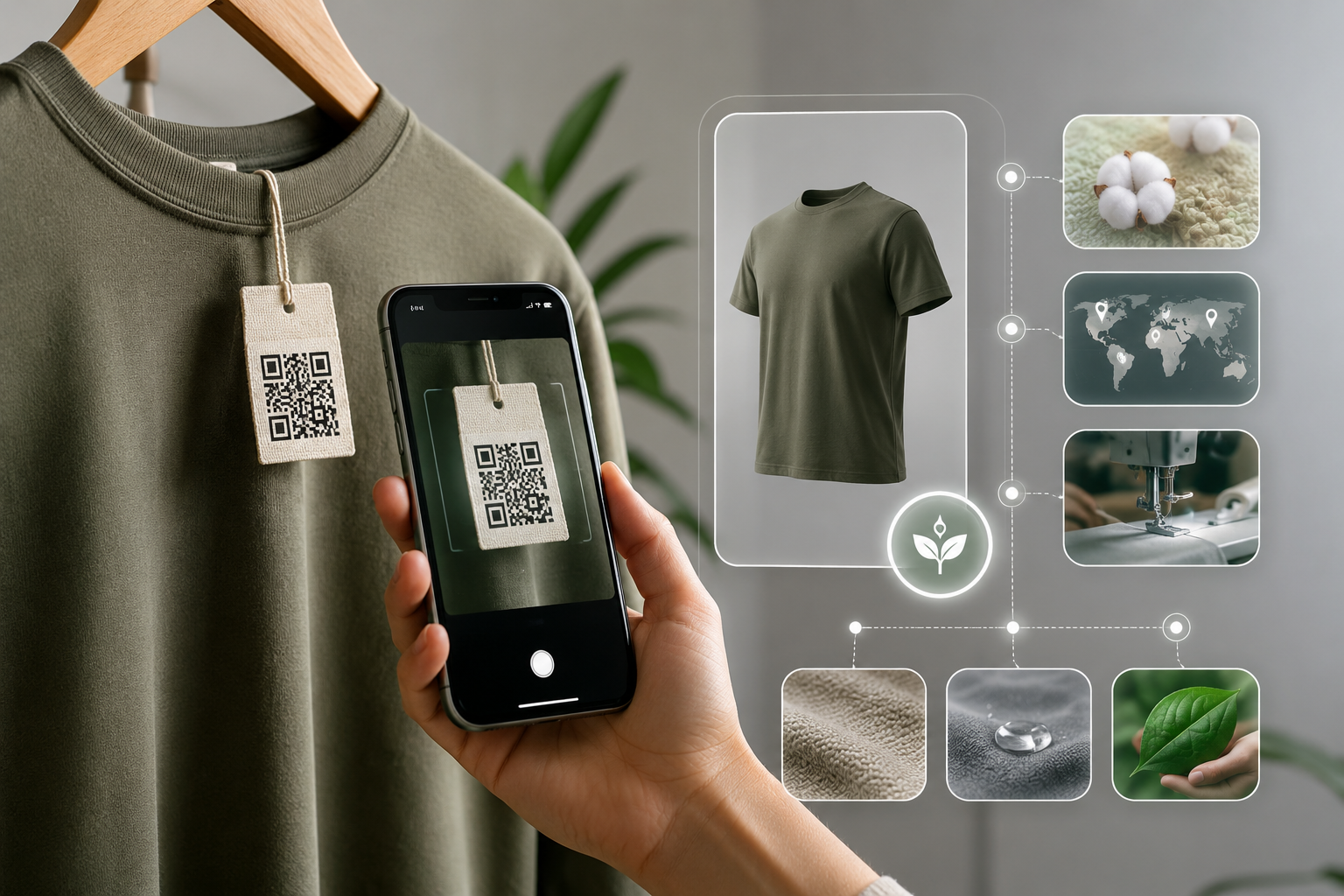
Each washing appliance gets a unique QR code that links to its live DPP record — accessible to consumers, regulators, and recyclers instantly.

The DPP must conform to ESPR-specified data schemas — covering energy labels, material declarations, repairability indices, and more.

Once generated, the DPP must remain accessible for the product's entire lifetime — and updated whenever specs change. PassoNext handles this automatically.

Recyclers and repair shops can scan the QR code to find disassembly instructions, component materials, and which parts can be recovered — extending appliance lifespans.
The EU DPP mandate rolls out in waves
Washing appliances are in the very first wave. If you sell into the EU, the clock is already running.
2027
Washing machines, tumble dryers, dishwashers, and washer-dryers. Delegated acts expected 2026 with 18-month implementation window.
2027
Industrial and consumer iron and steel products requiring full material traceability and recycled content declarations.
2028
Garments and textile products requiring material, sourcing, and sustainability transparency across supply chains.
2029
Home and office furniture — durability, materials, and sustainability, with regulations expected from 2027.
Required DPP Data
What your textile DPP must include
ESPR specifies four mandatory data categories for textiles and apparel. PassoNext guides you through each one with pre-built, compliant fields.

REACH-aligned substance declarations

- Percentage breakdown of every fiber used
- Recycled vs. virgin material content
- Substances of concern (REACH list)
- Lining, trim, and blend material disclosure
- Microplastic shedding indicators for synthetics

Full traceability, tier by tier
- Country of origin for fabric and assembly
- Manufacturing facility transparency
- Supply chain tier mapping
- Import and customs compliance data
- Batch and lot-level traceability

Extending garment lifespan
- Washing, drying, and ironing instructions
- Estimated garment lifespan
- Repair and alteration guidance
- Spare parts (buttons, zips) availability
- Durability and abrasion test ratings

GOTS, OEKO-TEX, and beyond
- GOTS, OEKO-TEX, and similar certificates
- CO₂ and water footprint indicators
- End-of-life recyclability share
- Social compliance declarations
- Take-back and resale programme details
See a garment passport, exactly as a shopper or inspector would.
Every field below is generated automatically from your Shopify product data and stays current as specs change.
- Fiber composition, down to the percentage point
- Country of origin and manufacturing facility
- Care, repair, and expected garment lifespan
- Certifications like GOTS and OEKO-TEX, shown prominently
Model WM-9000-EU · Digital Product Passport
dpp.passonext.com/wm-9000-eu
- Energy Class
- Repairability Score
- Recycled Content
- Country of Origin
- Spare Parts Available
Who must create the DPP?
Under ESPR, the “economic operator” placing the garment on the EU market carries full DPP responsibility — regardless of sales channel.

If your brand label is sewn into the garment, you're the responsible party — even when another factory manufactures it.

Companies bringing textiles from outside the EU into the EU market must confirm valid passports exist before sale.

Producers fitting out garments with their own components share responsibility for accurate material declarations.

Non-EU brands can appoint an EU-based representative to carry DPP compliance obligations on their behalf.
How it works
Stitch together a compliant DPP in 6 steps
PassoNext is built for exactly this use case. No coding, no consultants, no compliance headaches.

Fiber breakdown, origin, care, and certificates — your design or compliance team likely has most of it already.

One-click install from the Shopify App Store, then connect your store.

Guided fields validate entries against ESPR's textile schema as you type.

A unique, print-ready GS1 QR code is created for every product variant.

Print the code onto the garment's care label, hang tag, or packaging.

Change a supplier or certificate and the live passport updates — the code on the tag never has to change.
Built by people who live and breathe EU compliance
Experience, expertise, and merchant feedback — not buzzwords, our credentials.

We've worked with EU ecodesign rules and REACH since their earliest drafts — long before ESPR existed.

Every field and flow was shaped by Shopify apparel sellers navigating EU compliance for the first time.

Listed and approved on the Shopify App Store, reviewed against its security and data-handling standards. GDPR compliant.

Templates are kept aligned with the EU Commission's ESPR Working Plan as it evolves — not set-and-forget content.

Every plan includes email support from our compliance team — not a chatbot. Enterprise gets dedicated onboarding.

ESPR requires passports in the official language of every EU market you sell into. We handle this automatically.

Non-compliance consequences
What happens without a DPP for your textiles?
Once the ESPR delegated act for textiles takes effect, the cost of skipping compliance is steep.

Garments without a valid DPP can't be placed on or made available in the EU — including via Shopify or marketplaces.

Penalties vary by member state but can be substantial for repeat violations or large shipments of non-compliant goods.

Customs and market surveillance authorities check DPP compliance at EU borders. Non-compliant shipments risk seizure.

Sustainability-minded shoppers increasingly favor transparent brands — going without a passport leaves you looking less credible.
Delegated acts for textiles land in 2027 — with a short window to comply.
Build your DPP infrastructure now, while the rollout is still ahead of you instead of behind you.
- Templates pre-built for textiles
- Syncs directly with Shopify products
- Multi-language EU market support
- QR codes generated automatically
- Live updates, no re-printing tags
- Free plan — up to 10 products
Frequently asked questions
When exactly is the DPP deadline for textiles?
Textiles and apparel fall under the 2028 implementation wave of the EU’s ESPR. Because supply chains are long, EU manufacturers and retailers are expected to start requesting DPP-ready products from suppliers well before the formal deadline — early adoption can mean an earlier seat at the table with EU buyers.
Does this apply to online sellers on Shopify?
Yes. ESPR applies to any economic operator placing products on the EU market, including e-commerce and Shopify sellers. If you ship textiles to EU customers through your store, you’ll need a valid passport for each product — the regulation makes no distinction between physical retail and online channels.
What fiber data do I actually need to provide?
At minimum: the percentage breakdown of every fiber in the garment, country of origin, care and maintenance instructions, and any sustainability certifications you hold (such as GOTS or OEKO-TEX). PassoNext’s guided fields walk you through each requirement so nothing gets missed.
How long must a textile DPP remain accessible?
Under ESPR, the passport must stay accessible for the product’s expected lifetime. PassoNext hosts and maintains the record, and the QR code on the hang tag always points to the live, current passport — so a fabric or certificate change never requires a new label.
Can I become compliant without PassoNext?
Technically, yes — but it means building your own hosting, designing a compliant data schema, generating QR codes at scale, and maintaining multilingual records across your whole catalogue. For most Shopify merchants that’s impractical. PassoNext automates all of it from your Shopify admin.
What languages does the passport need to support?
The passport must be available in the official language of any EU member state where you sell the product. If you sell into Germany, France, and Poland, the passport should appear in German, French, and Polish. PassoNext generates these automatically from your store’s existing market settings.
Ready to make your textiles EU-compliant?
Start free. No credit card required. Your first 10 passports stay free, even after the trial ends.