
Digital Product Passport for Battery-Powered Products: What Shopify Merchants Need to Know
- Author:PassoNext
- Posted on:
- Updated on:
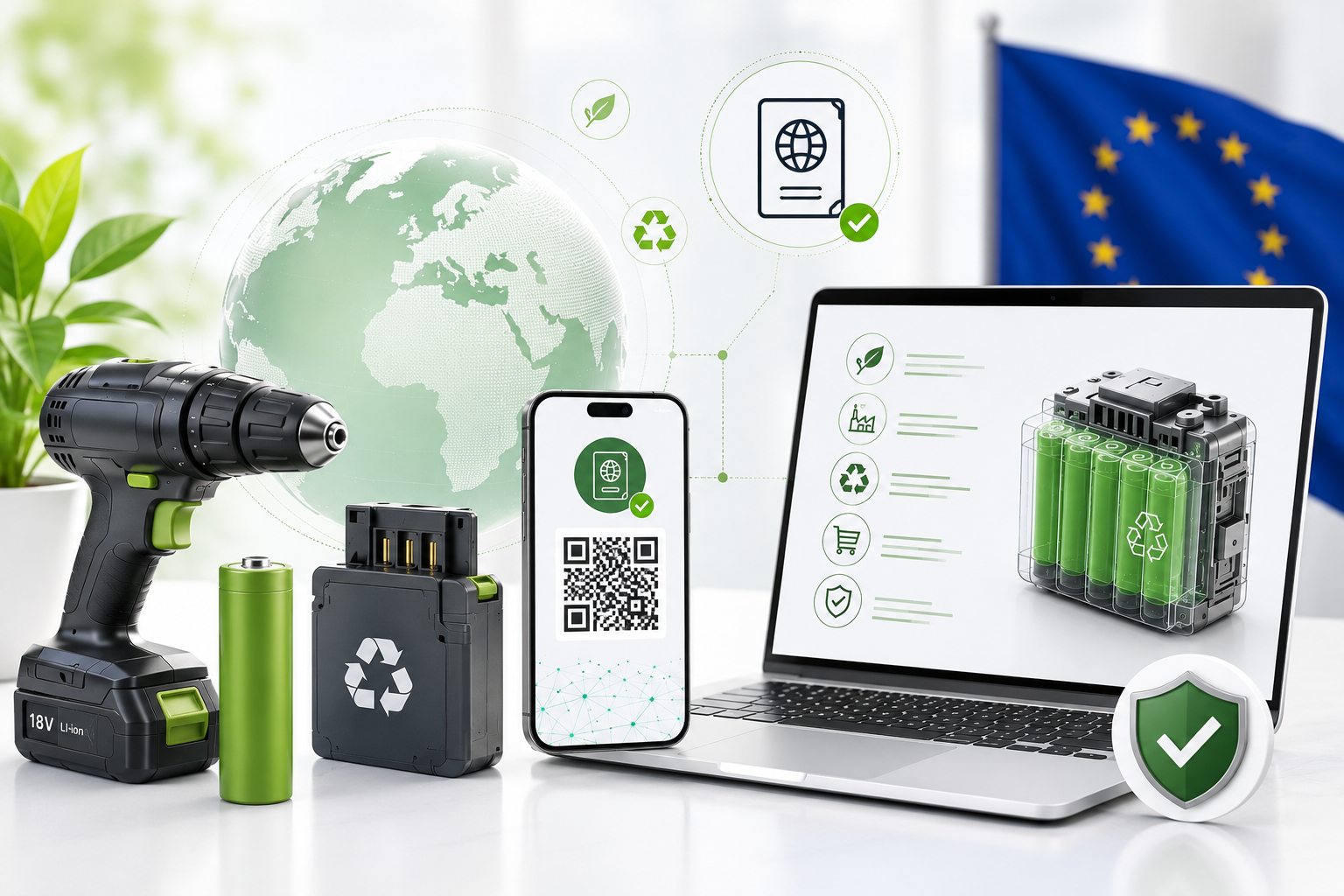
The regulatory landscape for E-commerce is shifting rapidly. As of 2026, the European Union’s framework for sustainability and product transparency—anchored by the Ecodesign for Sustainable Products Regulation (ESPR) and the specific Batteries Regulation (EU) 2023/1542—is no longer a distant theoretical challenge. It is an active mandate.
For Shopify merchants selling battery-powered products, this isn’t just about environmental policy. It is more about the legal right to sell in the EU market. The central aspect of this new compliance is the most-talked-about Digital Product Passport (DPP). So, if you are a merchant dealing in electronics, power tools, or any portable energy-reliant goods – understanding the DPP is a must. Experts call it the new currency of market access and consumer trust.
Key Takeaways: The Essentials of DPP Compliance
- Mandatory Transparency: The latest EU Battery Regulation mandates providing a “Battery Passport”. This regulation will become a mandate for many industrial and EV-related batteries by February 2027. Moreover, with broader ESPR requirements rolling out across product categories through 2028-2029.
- Data is the Product: Compliance is no longer just about the physical product. These are modern business times – it’s about the digital data attached to it. You must be able to verify material composition, carbon footprint, and sourcing.
- Automate to Survive: Manual data management is of a high-risk. Using a specialized DPP solution for Shopify is the only way to ensure 100% compliance without operational paralysis.
- Trust as a Conversion Driver: Transparency acts as a powerful marketing tool. Showing a verifiable, scannable passport combats greenwashing and builds long-term customer loyalty.
- Start Today: Compliance takes time to implement. Start mapping your supply chain data now to avoid future sales disruptions.
What is a Digital Product Passport (DPP)?
In simple terms, a Digital Product Passport for a battery is a digital record that documents the entire lifecycle of the item. It acts as a “birth certificate” for your product, accessible via a physical QR code, RFID, or NFC tag attached to the product or its packaging.
Under the new regulations, this passport must provide verifiable data on:
- Material Composition: What is inside the battery? (e.g., cobalt, lithium, nickel).
- Origin: Where were the raw materials sourced?
- Carbon Footprint: What is the environmental impact of its manufacturing?
- State of Health (SoH): For advanced batteries, real-time data on performance and remaining capacity.
- Recyclability: How should the battery be disposed of or recycled at the end of its life?
For regulators, this provides end-to-end traceability. For consumers, it offers the transparency they are increasingly demanding before making a purchase.
Why Battery-Powered Products are in the Spotlight
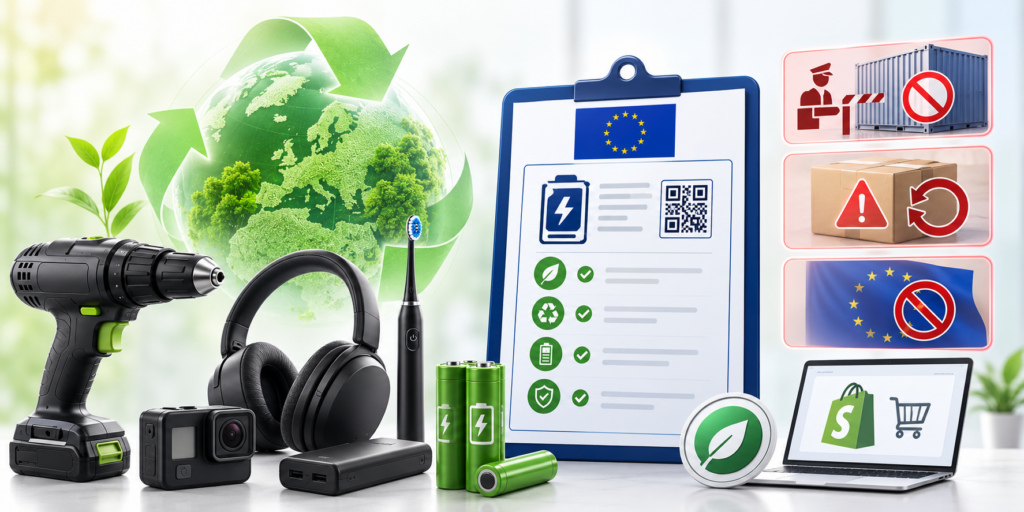
Batteries are the backbone of the modern portable economy, but they are also a significant environmental concern. Due to the raw materials required and the complexity of recycling processes, the EU has prioritized batteries under the new regulatory framework.
If you are a Shopify merchant selling battery-powered products, you are likely to be among the first wave of businesses required to implement these passports. Failure to comply does not just mean a potential fine; it can lead to customs blocks, product recalls, or a total ban from the EU market.
The Shopify DPP Challenge: Why Manual Isn't Enough

Many merchants ask, “Can I manage this with a spreadsheet?” The short answer is:
No.
A Digital Product Passport for battery-reliant goods requires granular, real-time data. You need to link specific manufacturing batches to their respective sustainability certificates, update recycling protocols, and ensure that the digital interface is accessible to both customs officials and end-users.
Doing this manually is a recipe for error. You need a DPP solution for Shopify that automates the heavy lifting. This is where specialized platforms like PassoNext become critical.
How a Specialized DPP Solution for Shopify Works
Using a purpose-built integration, merchants can bridge the gap between their store and regulatory requirements in four steps:
- Direct Integration: The app connects directly to your Shopify store, syncing your existing product data.
- Automated Compliance: It identifies missing information (like material sourcing) and helps you populate the required data fields to meet EU standards.
- Dynamic Templating: It automatically generates the required DPP templates based on your specific battery categories.
- Instant Publication: The system generates a QR code for your product pages, allowing customers to scan and view the passport instantly.
Key Benefits for Your Shopify Store
Implementing a robust Shopify DPP strategy is not just about compliance—it is a competitive advantage.
1. Future-Proofing Your Business
Regulations are only getting stricter. By adopting a solution that is already “ESPR-ready,” you protect your business from future policy shifts. You won’t have to scramble when the next delegated act is signed into law.
2. Building Unshakable Trust
”Greenwashing” is a major issue in the tech and power-tool sectors. When you provide a verifiable, scannable, and transparent passport, you prove your claims. This transparency leads to higher conversion rates, as modern shoppers prefer to buy from brands that stand by their sustainability promises.
3. Operational Efficiency
By automating your Shopify DPP workflows, you free up your team to focus on marketing and sales rather than data entry. A platform like PassoNext allows you to manage hundreds of products from a single dashboard, with features specifically built for EU compliance.
Frequently Asked Questions (FAQs)
What exactly is a Digital Product Passport (DPP) for battery products?
A Digital Product Passport is a secure, digital record that tracks a product’s lifecycle. For batteries, it includes verified information on raw material sourcing, chemical composition, environmental impact, and end-of-life recycling instructions. It is accessed via a physical QR code.
Why do Shopify merchants need a specific DPP solution?
Shopify stores require seamless data integration. A dedicated DPP solution for Shopify, like PassoNext, automates the process of gathering product data, syncing it with regulatory requirements, and generating the necessary templates. This prevents the manual errors that could lead to non-compliance penalties.
Are all battery-powered products affected by these regulations?
The EU has prioritized batteries due to their material complexity. As the ESPR and Batteries Regulation roll out, nearly all portable energy-reliant goods will eventually require a DPP to be legally sold within the European Union.
Can I sell in the EU without a Digital Product Passport?
As the delegated acts of the new regulations come into full effect, you will be unable to sell non-compliant products in the EU. Lack of a DPP can lead to restricted store access, significant financial penalties, and the forced recall of your inventory.
How does PassoNext improve my store's conversion?
Beyond compliance, PassoNext helps by providing high-quality, structured data that signals reliability to both search engines and customers. By offering scannable, transparent passports, you build “unshakable trust,” which directly correlates to higher conversion rates and reduced customer hesitation.
Conclusion
The era of anonymous manufacturing is over. As a Shopify merchant, your ability to provide a comprehensive Digital Product Passport for battery-powered items will define your success in the European market.
Compliance shouldn’t be a hurdle; it should be a showcase of your brand’s commitment to quality and sustainability. By leveraging automated tools to handle the technical and legal requirements, you can turn a complex regulation into a powerful selling point.
Are you ready to make your store ESPR-ready? Explore the PassoNext platform today to see how easily you can bring your Shopify store into compliance and start building trust that lasts a lifetime.
Get ESPR-ready today
The 2027 deadlines are closer than they look. Start building your DPP infrastructure now — not six months before the deadline. PassoNext is free to install.
