
Digital Product Passports for Electronics: Benefits, Compliance, and Best Practices
- Author:PassoNext
- Posted on:
- Updated on:
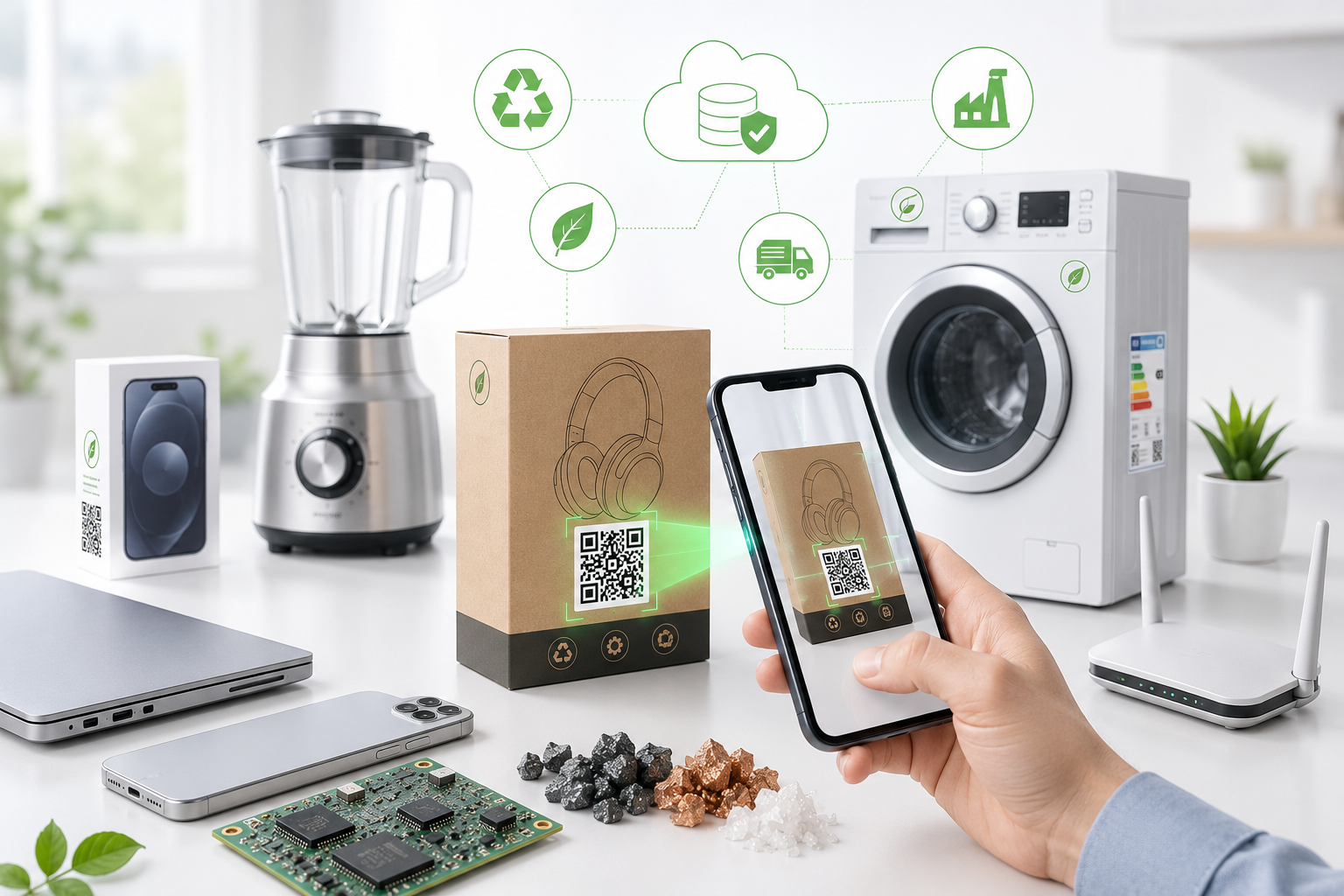
The global consumer electronics market is experiencing a massive regulatory shift. For E-commerce businesses selling electronic items – including smartphones, home appliances, laptops, and smart devices – into the European Union, standard product descriptions are no longer sufficient. In short, establishing a digital product passport app like PassoNext. This software automates the collection of raw material data, creates required tracking links, and builds compliant QR codes to keep your store aligned with modern international laws.
Key Takeaways for Electronics Sellers
- Immediate Mandate: The European Union is enforcing the digital product passport EU first for high-impact sectors, meaning electronics and home appliances must comply ahead of other consumer goods.
- Location-Based Law: Compliance depends on where your customer lives. Even if your business is based anywhere in the world, any electronic item shipped to an EU buyer must have a valid Digital Product Passport for Electronics setup.
- Turnkey Automation: Using a dedicated Shopify digital product passport tool like PassoNext prevents customs blocks by replacing manual paperwork with automated, print-ready QR codes and smart data synchronization.
Understanding the Concept: What is a Digital Product Passport for Electronics?
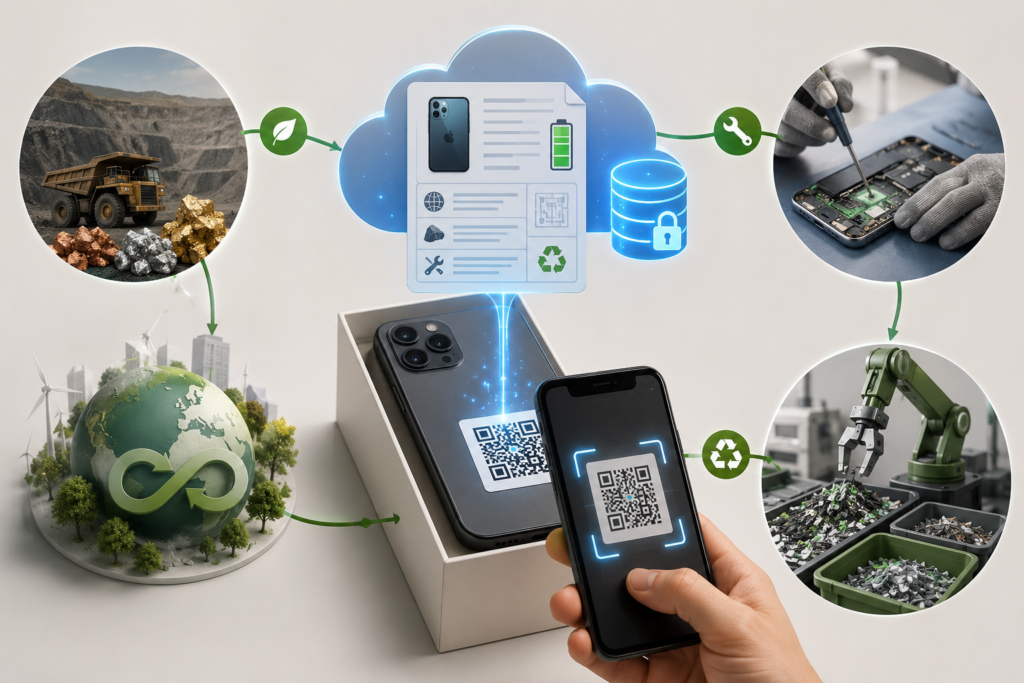
To understand this new concept, think of a Digital Product Passport (DPP) as a highly detailed, digital “birth certificate” and “nutrition label” combined into one. Instead of showing fat or sugar content, a DPP for electronics reveals exactly what is inside a device. It details where the internal raw metals were mined, the lifespan of the battery, how easily a consumer can repair a broken component, and exactly how to dismantle the unit safely at a recycling plant.
This tracking information is stored securely in the cloud. It connects directly to the physical item using a data link, like a scannable QR code printed directly onto the product’s box, label, or user manual.
For a long time, the electronics industry operated on a linear model: make a device, use it, and throw it into a landfill as electronic waste. The European Union’s Ecodesign for Sustainable Products Regulation (ESPR) changes this. By enforcing Digital Product Passports for Electronics, the government ensures that every electronic item sold can be tracked, repaired, and recycled, moving the industry toward a fully circular economy.
Why Is This Mandatory? The Legal Risks of Ignoring ESPR
If you run an online retail store on Shopify and ship electronic goods to buyers living in Europe, these laws apply directly to your business. It does not matter if your office is based in the United States or Asia—the regulation targets where the customer receives the item.
The EU has placed electronics and home appliances in its very first wave of enforcement. Under the ESPR Shopify rules, failing to provide a clear digital passport carries severe business consequences:
- Customs Delays and Blocks: Border protection officers check imports for valid passport links. Non-compliant shipments are blocked immediately at the border.
- Total Inventory Recalls: If unverified electronics reach European shelves, authorities can force your brand to pull every single unit from the market.
- Heavy Financial Penalties: Fines are calculated based on your total global business turnover, creating a massive financial risk for your online business.
Using a specialized Shopify DPP tool like PassoNext removes these risks. It automatically structures your backend data fields to match the exact requirements of European customs, keeping your international shipping lines open and running smoothly.
The Key Benefits of Setting Up a DPP for Electronics
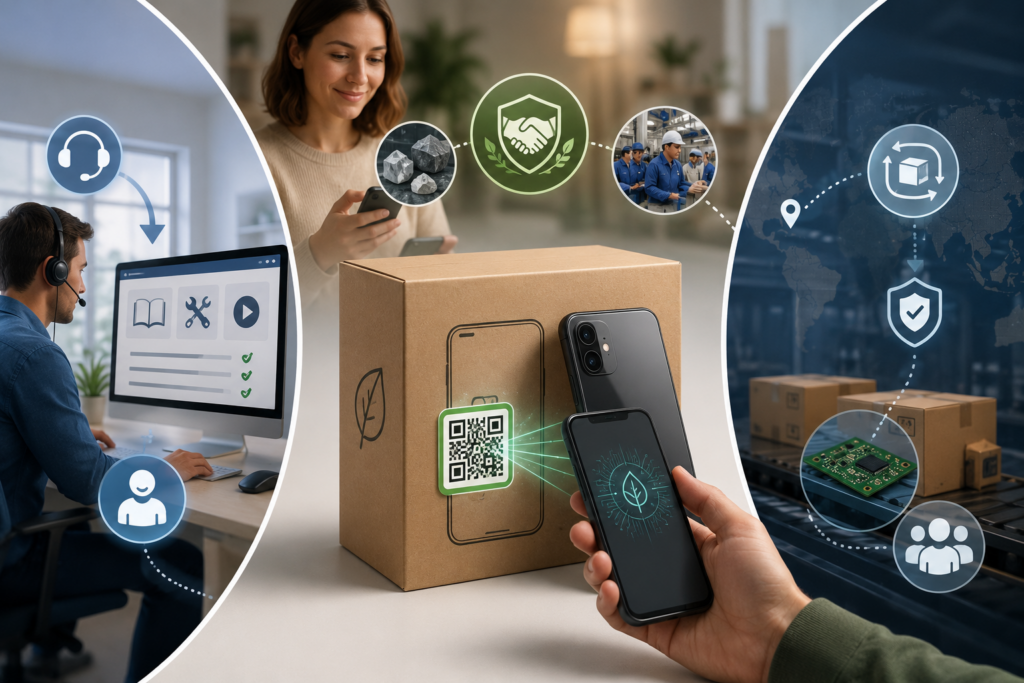
While compliance is the primary reason to set up these passports, implementing a clean data tracking system offers major commercial advantages for modern brands.
- Builds Deep Consumer Trust: Modern tech buyers are increasingly conscious about sustainability. When a shopper scans your QR code and reads an honest breakdown of your materials and fair labor practices, they are much more likely to choose your brand over a competitor who hides their supply chain details.
- Reduces Customer Support Requests: You can upload your official user manuals, setup guides, and troubleshooting documentation straight into your passport data. When a customer can find answers instantly by scanning the box, your support team receives fewer basic tickets.
- Simplifies Product Recalls and Warranties: If a specific batch of electronic components experiences a technical fault, you can track those exact serial numbers down to the specific customers who bought them, turning a major recall headache into an organized update.
How PassoNext Automates Your Store Compliance
Instead of spending thousands of dollars on specialized legal teams or custom web developers, the PassoNext application integrates directly into your online dashboard. It provides simple, automated tools built specifically to handle complex environmental tracking:
- Full Journey Traceability: This unique feature allows you to explore your product’s entire history – from the raw components to the final retail package, just like that! Buyers can even check where separate metals were processed, where the device was assembled, and how it reached them. This complete transparency satisfies strict customs audits effortlessly.
- Hands-Free Law Updates: International E-commerce rules are volatile and are subject to change constantly. This feature monitors European trade regulations in the background. If a specific law updates, the app automatically adjusts your template requirements so your business stays compliant without manual research.
- Sustainability and Energy Reports: Electronic products are sensitive and require precise disclosures regarding energy efficiency scores and carbon impact. This analytics feature organizes your technical data points into a clean, visual format that everyday consumers can easily read and understand.
- Repair and Recycling Assistance: To combat electronic waste, you can include guided step-by-step repair paths, spare parts access, and certified local drop-off points within the digital passport, encouraging sustainable use.
- Smart Inventory Management: Managing multiple variants like different storage sizes, colors, and models can lead to mistakes. This feature assigns unique tracking links across your entire stock, keeping your inventory completely organized.
- Multi-Language Transla0tions: Europe speaks dozens of languages. This tool automatically translates your passport details based on where your buyer is located, ensuring a customer in Germany reads your safety metrics in German while a buyer in Italy sees them in Italian.
Best Practices for Deploying a Digital Passport on Shopify
Successfully launching a digital passport program requires keeping your workflows organized. PassoNext can be your best companion in this journey. Use this step-by-step deployment timeline to set up your store safely without disrupting your checkout performance.
- Install PassoNext and Match Your Tech Category
Configuration
Add the PassoNext application through the official Shopify App Store. Access your master admin dashboard to select your specific product category, ensuring the software loads the correct fields required for electronics. - Populate Your Technical Specs in Bulk
Data Synchronization
Connect your inventory list. Use the integrated automation engine to auto-fill common attributes, or upload a basic CSV spreadsheet containing your raw component sources, battery wattages, and factory origins. - Embed Information Blocks Into Your Product Pages
Storefront Formatting
Open your live online store theme editor. Drag and drop the app’s clean information modules directly onto your product layouts, allowing international site visitors to inspect your transparency credentials before buying. - Generate and Print Smart QR Codes for Packaging
Physical Labeling
Export your finished high-resolution QR codes and GS1 Digital Links from the database. Send these image files directly to your manufacturing team or box suppliers to print them cleanly onto your product packaging, inserts, or warranty cards.
Technical Comparison: Standard QR Codes vs. GS1 Digital Links
Understanding how data carriers communicate with different software systems is essential for long-term inventory planning:
| Primary Destination | Routes to one fixed website URL. | Routes to multiple data targets based on who scans it. |
| Warehouse Scanning | Cannot be read by older retail checkout scanners. | Seamlessly integrates with retail point-of-sale systems. |
| Content Updates | Links cannot be altered once printed. | Content updates instantly in the cloud without reprinting packaging. |
| Language Adaptation | Displays the same language to all visitors. | Automatically switches languages based on user location. |
Frequently Asked Questions
What happens if my Shopify store is not ESPR compliant?
If you sell to consumers living in the EU and fail to comply with ESPR guidelines during your industry’s rollout phase, you risk facing substantial monetary fines, official product recalls, or being blocked entirely from exporting or selling inside the European single market.
Do I need a technical developer to build a Digital Product Passport?
No. By utilizing an automated application like PassoNext, you do not need to write a single line of code. The system integrates directly into your native Shopify interface, generating web-ready links and interactive widgets automatically.
Can I build an electronic product passport without an app?
Technically yes, but doing so manually requires creating thousands of individual website pages, managing massive metadata fields for every unique serial number, and keeping track of international trade law changes by hand. Using an automated app saves hundreds of working hours and prevents costly manual data entry errors.
Get ESPR-ready today
The 2027 deadlines are closer than they look. Start building your DPP infrastructure now — not six months before the deadline. PassoNext is free to install.
