
How the EU Digital Product Passport Is Transforming Product Transparency
- Author:PassoNext
- Posted on:
- Updated on:
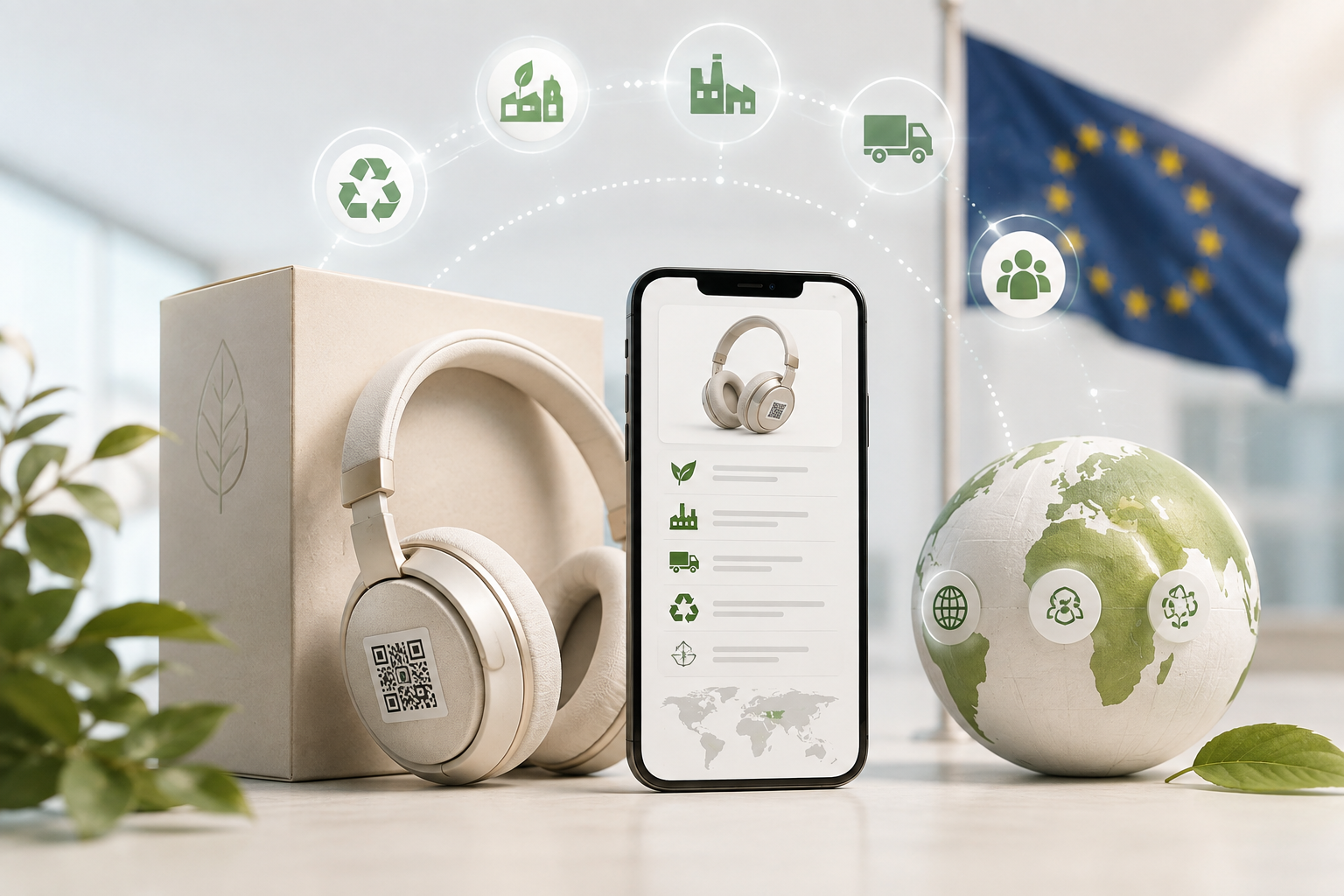
In an era where consumers, regulators, and investors demand accountability, product transparency is no longer optional—it is a core business requirement. Global supply chains operated like black boxes for decades. Consumers knew little about raw material origins, manufacturing ethics, or environmental footprints left behind once items reached end-of-life status.
That dynamic is undergoing a seismic shift driven by the European Union. Under the European Green Deal and the Ecodesign for Sustainable Products Regulation (ESPR), European lawmakers introduced a groundbreaking framework: the EU Digital Product Passport.
This mandate requires physical products sold across European markets to feature a standardized, machine-readable digital record detailing lifecycle metrics, environmental footprints, and supply chain origins.
Beyond regulatory compliance, this framework is actively reshaping modern e-commerce, global trade, and consumer trust.
Key Takeaways
- Mandatory Compliance: The EU digital product passport is a legal requirement under ESPR regulation (EU 2024/1781) affecting all physical goods sold in the EU market.
- Core Definition: If you ask what is a digital product passport – it is a scannable digital twin, providing verified data on sourcing, carbon footprint, repairability, and recyclability.
- Strategic Growth: Beyond meeting legal deadlines, adopting the digital product passport builds brand trust, prevents greenwashing, and unlocks circular resale models.
- E-Commerce Integration: Merchants can use a dedicated digital product passport app to simplify store catalog syncing, QR code generation, and store displays.
- Brand Protection: Automated passport systems power robust product authentication Shopify stores need to verify physical items and prevent counterfeiting.
What Is a Digital Product Passport?
To understand this transformation, we must clarify a fundamental question: what is a digital product passport?
A digital product passport (DPP) is a standardized digital twin of a physical item that records, manages, and shares critical product lifecycle data—from raw material sourcing through manufacturing, distribution, usage, repair, and recycling.
When considering what is a digital product passport, think of it as a scannable gateway. Accessed via physical data carriers—such as QR codes, RFID tags, or NFC chips attached directly to goods—the passport delivers structured, verified information instantly to consumers, regulators, and recycling facilities.
By replacing static marketing claims with auditable data, adopting a digital product passport EU standard transforms opaque supply chains into open books.
The Regulatory Mandate: Why the EU DPP Matters Now
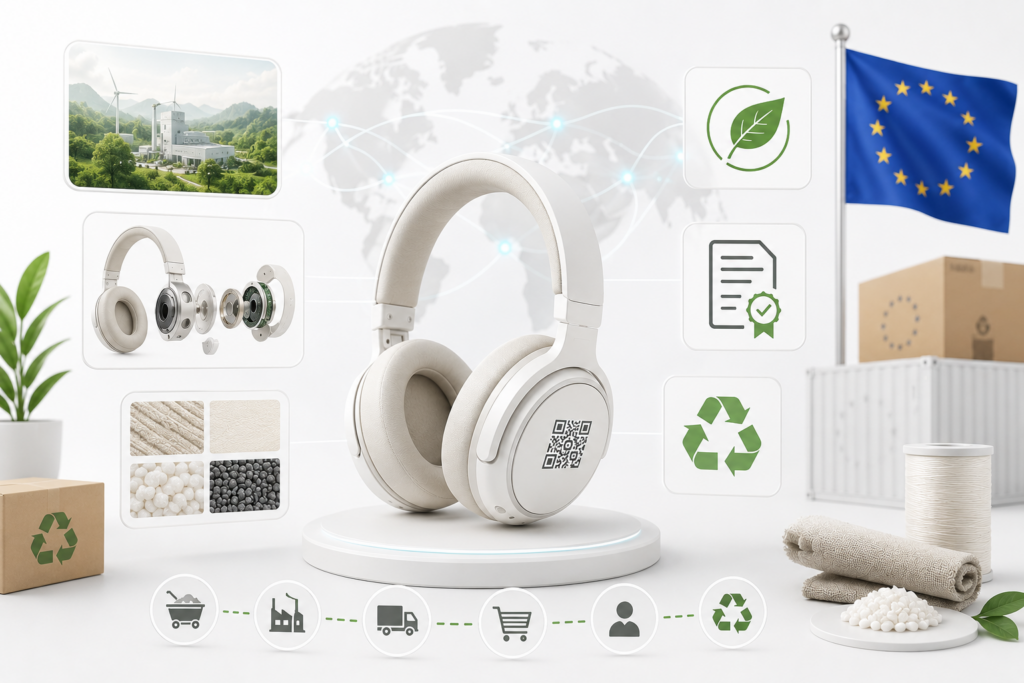
Deploying the EU digital product passport is an active regulatory rollout. Enacted under Regulation (EU) 2024/1781 (ESPR), the regulation applies to physical goods placed on the European market, regardless of whether they were manufactured inside or outside Europe.
Sector Rollout Timeline
- 2024–2025: ESPR enacted and delegated acts drafted across primary categories.
- 2026: Draft registry rules finalized and battery passport enforcement begins.
- 2027–2030: Phased sector expansion covering textiles, apparel, consumer electronics, furniture, and plastics.
The European Commission is deploying the digital product passport across primary industrial sectors through this phased schedule:
- Batteries & Electric Vehicles: Requirements for industrial and EV batteries establish strict tracking of critical raw materials like lithium and cobalt, carbon emissions, and recycled content percentages.
- Textiles & Apparel: Apparel brands selling in European markets must declare fiber compositions, hazardous chemical compliance, and supply chain origins.
- Consumer Electronics & ICT: Tech hardware must disclose repairability scores, component availability, and hazardous material declarations.
- Furniture, Construction, & Plastics: Follow-up expansion phases target high-impact consumer sectors to enforce circular economy integration.
For international businesses and e-commerce brands, compliance with EU digital product passport regulations is mandatory for maintaining European market access. Non-compliance risks customs holds, financial penalties, and market exclusion.
Beyond Compliance: Turning Transparency into Commercial Advantage

Meeting regulatory requirements keeps your business operational, but using that data strategically is what drives sales. When you give customers direct access to your supply chain facts, transparency stops being a compliance task and becomes a strong selling point.
Here is how brands are turning these requirements into real commercial growth:
Building Unshakeable Customer Trust
Shoppers have grown skeptical of misleading eco-friendly claims. So, when they get to scan a product and view its verified material sources, carbon metrics, and ethical certifications on the spot – you eliminate doubts and make the buying decision effortless.
Justifying Premium Pricing
Modern consumers are willing to pay more for products that last and carry clear proof of quality. Showing the exact craftsmanship, premium materials, and fair labor practices behind an item makes higher price points feel entirely justified.
Creating Interactive Post-Purchase Experiences
A scannable code on your product or packaging does not just display raw data—it keeps the customer connected to your brand. You can use that landing page to share care guides, offer seamless repair services, or introduce related collections long after the initial purchase.
Unlocking Higher Value in the Resale Market
Re-commerce is expanding rapidly. Products equipped with verifiable ownership and authenticity records hold their value far better over time, giving second-hand buyers total confidence while reinforcing your brand’s reputation for quality.
Seamless Product Authentication and Anti-Counterfeiting
Counterfeiting costs global trade hundreds of billions annually while damaging brand equity. By pairing physical goods with dynamic digital records, brands achieve robust product authentication Shopify merchants and high-end retailers depend on to verify item legitimacy instantly.
Implementing the Digital Product Passport in E-Commerce
Building custom software to manage passport data is manageable for global enterprises with massive IT budgets. However, for growing direct-to-consumer (DTC) brands, e-commerce retailers, and independent merchants running on popular platforms, manual execution poses technical challenges.
Creating, updating, and linking thousands of individual product passports manually consumes significant engineering resources. E-commerce merchants need tools that automatically gather supply chain data, organize it according to regulatory schemas, generate scannable codes, and dynamically display passport badges on online storefronts.
Comparing Implementation Approaches
| Operational Stage | Native E-Commerce Challenge | Dedicated App Solution |
| Data Schema | Manual JSON formatting required | Automated EU-compliant templates |
| Product Sync | Disconnected inventory systems | One-click catalog synchronization |
| Code Generation | Manual QR code assignment | Dynamic QR and NFC tag generation |
| Storefront UI | Custom theme liquid coding | Plug-and-play storefront badges |
This operational gap is where a dedicated digital product passport app becomes essential.
Solutions like PassoNext bridge the gap between complex European regulations and daily e-commerce management. By installing a dedicated digital product passport app, store owners can automate passport generation without writing code.
Key platform features streamline the implementation process:
- Automated Data Mapping: Input material sourcing, supply chain origins, and carbon metrics directly into pre-formatted, compliant schemas.
- Seamless Platform Sync: Automatically connect store product catalogs with corresponding digital passports across catalog updates.
- Dynamic Scannable Identifiers: Generate high-resolution QR codes for physical product packaging, hangtags, or care labels.
- Interactive Storefront Badges: Display transparent passport summaries directly on Product Detail Pages (PDPs), letting shoppers review environmental credentials before buying.
- On-Demand Product Authentication: Leverage encrypted digital records to power the exact product authentication Shopify sellers need to combat counterfeits and protect brand reputation.
Using a specialized digital product passport app turns compliance requirements into an automated, growth-generating asset.
Strategic Roadmap: Preparing Your Store Today
Preparing for digital product passport EU mandates requires a clear implementation plan. Organizations should follow this five-step strategy:
Step 1: Conduct a Supply Chain Audit
Map out existing data gaps. Collect verified information from suppliers regarding material composition, country of origin, manufacturing energy use, and safety compliance certificates.
Step 2: Select the Right Technology Tools
Select the best software partners capable of maintaining interoperable, machine-readable records that match evolving standards. Deploying an integrated digital product passport app simplifies data collection and customer-facing presentation.
Step 3: Launch a Focused Pilot
Rather than converting an entire catalog at once, start with a high-priority product line—such as a best-selling apparel collection or core electronic line. Use this pilot to test data flows, supplier responses, and customer interaction rates.
Step 4: Integrate Physical Data Carriers
Time to check physical data carriers. Go for design packaging, hangtags, or woven labels that include persistent QR codes or NFC tags. You must also ensure that physical media remains scannable throughout the product’s lifespan.
Step 5: Educate Customers & Promote Transparency
Highlight your DPPs across different marketing channels, social media platforms, and product pages. Show your buyers how scanning the code reveals their true craftsmanship, sourcing, and environmental footprint behind their purchase.
Frequently Asked Questions (FAQs)
What products are covered under the EU Digital Product Passport mandate?
The regulation covers almost all physical products placed on the EU market under the Ecodesign for Sustainable Products Regulation (ESPR). Priority sectors include industrial and EV batteries, textiles, apparel, consumer electronics, furniture, plastics, and construction materials.
Does the EU DPP apply to non-EU brands selling in Europe?
Yes. The regulation applies to any product sold within the European Union, regardless of where the business or manufacturing facility is located. Overseas brands and e-commerce stores must comply to pass customs and enter the market.
How do small businesses and Shopify stores manage compliance easily?
Small and medium businesses can use specialized tools like a digital product passport app to automate data structuring, product catalog syncing, and dynamic QR code generation without custom engineering.
How does a Digital Product Passport help with product authentication?
Every DPP links a physical product to a unique, tamper-evident digital record. This provides reliable product authentication Shopify merchants can use to verify true ownership, batch numbers, and anti-counterfeiting credentials instantly.
Embracing the Radical Transparency
The EU Digital Product Passport is rapidly redefining the global commerce shift. What initially began as an environmental directive under the ESPR has now transformed the very foundation for product data, circular economy planning, and brand trust.
For businesses selling into European markets, meeting these standards is non-negotiable. Brands that embrace transparency early will gain competitive advantages—building consumer loyalty, optimizing supply chains, strengthening product authentication Shopify operations depend on, and establishing leadership in sustainable commerce.
Exploring platform capabilities with tools like PassoNext and implementing automated platform features provides a fast, efficient route to achieving full compliance.
Get ESPR-ready today
The 2027 deadlines are closer than they look. Start building your DPP infrastructure now — not six months before the deadline. PassoNext is free to install.
