
Choosing the Right Digital Product Passport App for Shopify: The Ultimate Merchant Guide
- Author:PassoNext
- Posted on:
- Updated on:
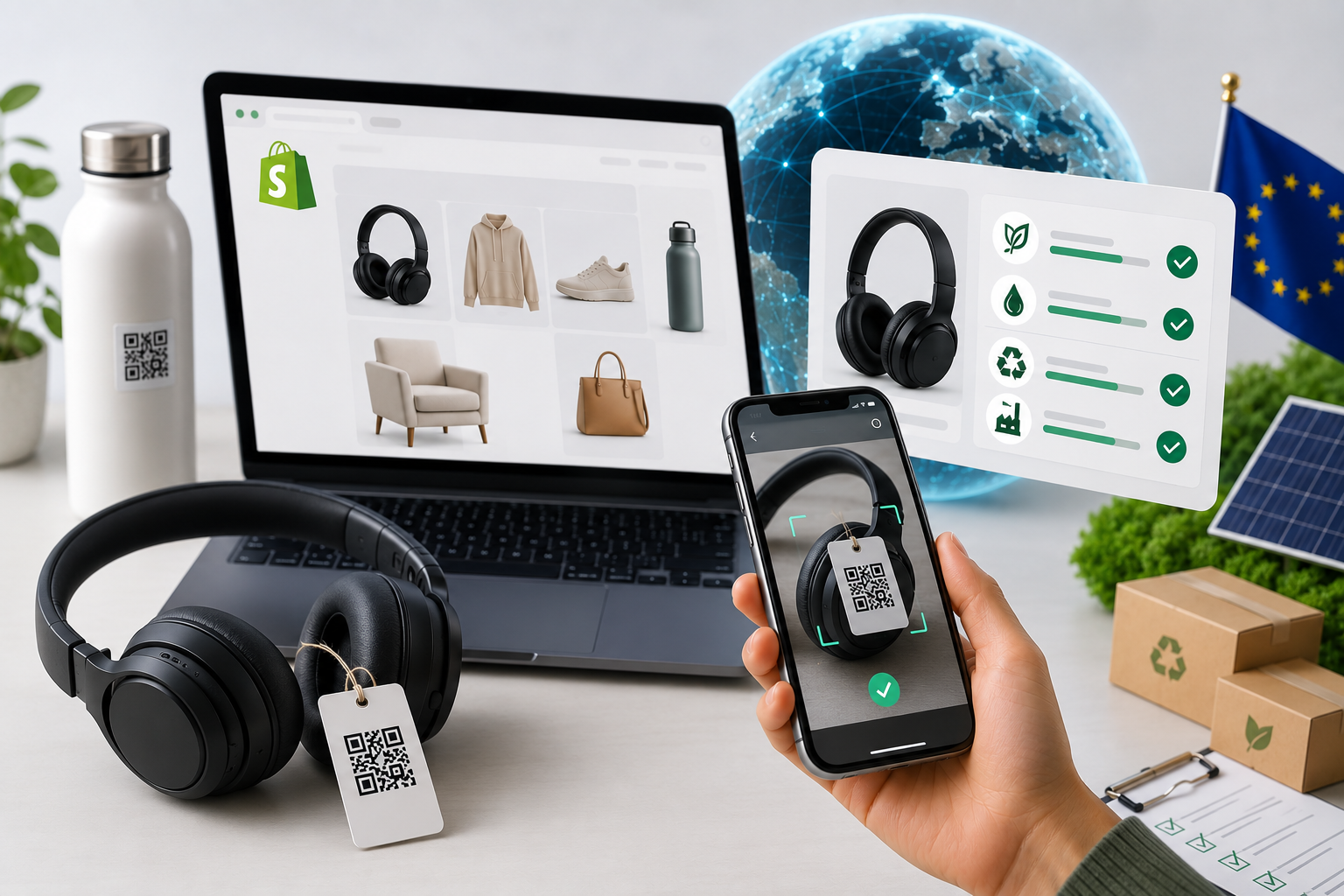
The landscape of global e-commerce is shifting rapidly. If you sell products online, the days of relying solely on vague marketing buzzwords like “eco-friendly” or “sustainably sourced” are officially over. Transparency is no longer a choice; it is a regulatory mandate.
Under the European Union’s groundbreaking Ecodesign for Sustainable Products Regulation (ESPR), businesses selling into European markets must soon implement a Digital Product Passport (DPP). This compliance wave begins rolling out in phases between 2027 and 2029, starting with washing appliances, followed quickly by textiles, fashion, and furniture.
As a Shopify merchant, navigating this new landscape can feel overwhelming. How do you map your entire supply chain, track materials, and present this data to consumers without rebuilding your tech stack from scratch?
The answer lies in choosing the right DPP app for Shopify. In this comprehensive guide, we will break down what a digital product passport is, explore the critical features your store needs to stay compliant, and show you how tools like PassoNext can future-proof your business today.
What is a Digital Product Passport (DPP)?
A Digital Product Passport (DPP) is a secure, digital record that tracks a product’s entire lifecycle. It provides consumers, regulators, and supply chain partners with verified data regarding a product’s raw materials, manufacturing origins, environmental impact, and circularity (such as recycling or repair instructions).
Think of it as a transparent, digital birth certificate for everything you sell.
Instead of hiding this information in complex corporate databases, a Shopify digital product passport brings it directly to the storefront. Typically, this is achieved by adding an EU product passport QR code to the physical item or its packaging, or by embedding a dedicated digital widget onto your Shopify product description pages. When scanned, it instantly reveals the background story of the item.
Why ESPR Compliance Matters for Your Shopify Store Right Now

If you think you have plenty of time to worry about EU regulations, think again. The foundation for compliance is being laid today. While enforcement rolls out in staggered phases, preparing your product data structures takes time.
Failure to comply with the ESPR Shopify requirements carries severe consequences:
- Market Access Restrictions: You could be blocked from selling your products within the lucrative European Union market.
- Heavy Penalties: Regulatory bodies are empowered to levy massive financial fines on non-compliant brands.
- Loss of Consumer Trust: Modern shoppers are deeply cynical of greenwashing. Brands that fail to provide verifiable proof of sustainability will lose market share to transparent competitors.
By acting now and implementing an intuitive digital product passport solution, you turn a legal obligation into an incredible competitive advantage.
Crucial Features to Look for in a Shopify DPP App
The Shopify App Store is filled with tools claiming to solve compliance issues, but a true ESPR-ready application needs to do much more than simply generate basic text fields. When evaluating apps, look for these foundational features:
1. Automation and Seamless Syncing
Manually entering supply chain details for hundreds of SKUs is an absolute nightmare. Your chosen app should pull data straight from your existing Shopify product profiles, flag missing compliance fields, and auto-populate templates based on your specific industry.
2. Multi-Language Support
The EU marketplace spans dozens of countries and languages. A robust app must dynamically translate your DPP pages into multiple languages, ensuring a localized and premium experience for global buyers.
3. Dynamic QR Code Generation
An EU product passport QR code should be easy to generate, download in bulk, and print onto your hangtags, labels, or boxes. These codes must link cleanly back to your secure product passport data.
4. Advanced Analytics
You need visibility into how consumers interact with your sustainability data. Look for apps that track passport views, scan rates, and customer engagement metrics.
5. Beautiful Storefront Integration
Compliance doesn’t have to look ugly. The digital passport should fit seamlessly into your existing Shopify theme, matching your branding, fonts, and colors to elevate the overall user experience.
Spotlight on PassoNext: The Ultimate Solution for Shopify Merchants

When it comes to dedicated compliance tools built explicitly for the modern e-commerce entrepreneur, PassoNext stands out as a premier choice.
Developed in deep collaboration with active Shopify merchants and backed by a team with over 12 years of hands-on experience in EU regulations and digital compliance, PassoNext strips the complexity entirely out of the ESPR transition. It provides an all-in-one platform to automate, manage, and design beautiful digital product passports.
Step-by-Step Compliance with PassoNext
PassoNext gets your store fully compliant in four straightforward steps:
- Download: Install the PassoNext app straight from the Shopify App Store with a single click.
- Category Selection: Choose your specific product categories to instantly unlock predefined compliance requirements mapped to EU standards.
- Template Generation: The app automatically builds optimized DPP templates based on your selection, eliminating guesswork.
- Publish DPP: Generate, connect, and publish the live passports to your store alongside downloadable QR codes.
Powerful Features Under the Hood
- End-to-End Traceability: Map your product journeys beautifully from raw components all the way to recycling programs.
- Sustainability Analytics: Monitor environmental footprints and performance insights in real time.
- Circular Lifecycle Support: Build consumer workflows directly into the passport that explain how to repair, resell, or recycle the product once its initial life ends.
- Enterprise-Grade Flexibility: From small indie labels to multi-million dollar corporations, PassoNext scales perfectly with tier-based structures.
How PassoNext Compares: Features and Pricing
Choosing a platform also means finding something that aligns perfectly with your business operational budget. PassoNext offers highly competitive, transparent pricing tiers that allow you to grow into compliance:
| Plan | Price | Key Features Included | Best For |
| Free | $0/mo | Up to 10 products/DPPs, DPP editor, QR codes, storefront widget, basic analytics, email support. | Brand-new startups testing out the compliance waters. |
| Starter | $9/mo | 100 Digital Product Passports, complete editor access, dynamic QR codes, full integration, analytics. | Boutique shops and growing niche labels. |
| Pro | $19/mo | 500 Digital Product Passports, complete toolkit, priority layout styling, passport analytics overview. | Established Shopify brands with scaling collections. |
| Enterprise | $80/mo | Unlimited Digital Product Passports, premium support, maximum optimization, unlimited analytics. | High-volume cross-border merchants and corporate stores. |
How to Protect Your Brand from Greenwashing Claims
Greenwashing rarely happens out of malice; it usually happens out of a lack of organization. A brand might genuinely source organic cotton, but if they lack the paper trail or verifiable certificates to prove it, regulatory watchdogs or cynical consumers on social media can quickly dismantle their reputation.
A dedicated DPP app Shopify solution creates a centralized, unalterable database of truth. When your environmental impact, material origins (like 100% Portugal sourcing or 100% Organic Cotton), and certifications are laid out with zero ambiguity, your brand becomes unassailable. True compliance builds an armor of trust around your business.
Frequently Asked Questions
Which exact electronics are required to have a digital product passport first?
The European Commission prioritizes items with high energy consumption and material waste. Large household appliances—including washing machines, dryers, dishwashers, and refrigerators—are required to comply first, followed rapidly by consumer devices like smartphones, laptops, and tablets.
Does adding these passport widgets slow down my mobile website speed?
No. High-quality compliance tools utilize optimized, asynchronous loading scripts. This technical setup ensures that your vital sales assets—like product images, pricing tables, and checkout buttons—load completely first, ensuring your site speed remains fast and stable.
Can I change the information inside a QR code after it is printed?
Yes, if you use a dynamic passport application. While the physical barcode or QR code on your product tag remains the same, the digital passport data it points to can be updated inside your Shopify app dashboard at any time if your supply chain details shift.
Does ESPR apply to US-based Shopify merchants?
Yes. The regulation applies to any business selling products into the EU market, regardless of where the company itself is legally headquartered or registered.
The Verdict: Don’t Wait for the Mandate
The transition toward fully transparent commerce is accelerating. Waiting until 2027 to start fixing your supply chain data structure means falling behind competitors who are already using transparency to capture the hearts of eco-conscious consumers today.
By integrating a tailored Shopify digital product passport strategy right now, you clear the hurdle of EU compliance long before it becomes an emergency. Check out tools like PassoNext to explore their features, test their free plan, and take your first definitive step toward a sustainable, compliant, and highly trusted global e-commerce brand.
Get ESPR-ready today
The 2027 deadlines are closer than they look. Start building your DPP infrastructure now — not six months before the deadline. PassoNext is free to install.
